

Healthcare Technology Management at Sea: A New Era of Capability, Connectivity, and Complexity
By Robert Wentworth, VP Biomedical Operations
For much of the cruise industry’s history, leaders treated shipboard medical care as a necessary support function. Medical teams delivered capable care with limited space and staff and at significant distance from shoreside facilities.
That framing no longer applies.
Today, cruise medical centres operate more like compact urgent care clinics. Medical teams have access to cardiac monitoring, defibrillation, ventilatory support, X-ray, ultrasound and onboard laboratory testing, with some fleets also offering dental services. Curated formularies and defined clinical pathways support these capabilities and raise the standard of care across the fleet.
As capabilities have expanded, so have expectations. Operators now treat onboard medical care as a core element of operational readiness, guest confidence and regulatory compliance rather than a background service. Maritime labour frameworks reinforce this shift by requiring timely and comparable access to care for seafarers, supported by real-time shoreside medical advice.
This creates a clinical environment that is more capable but also more exposed when systems fail or degrade without active oversight.
In a maritime setting, equipment reliability is paramount. A single unexpected failure can restrict care options, force routing decisions, increase escalation costs and create reputational risk.
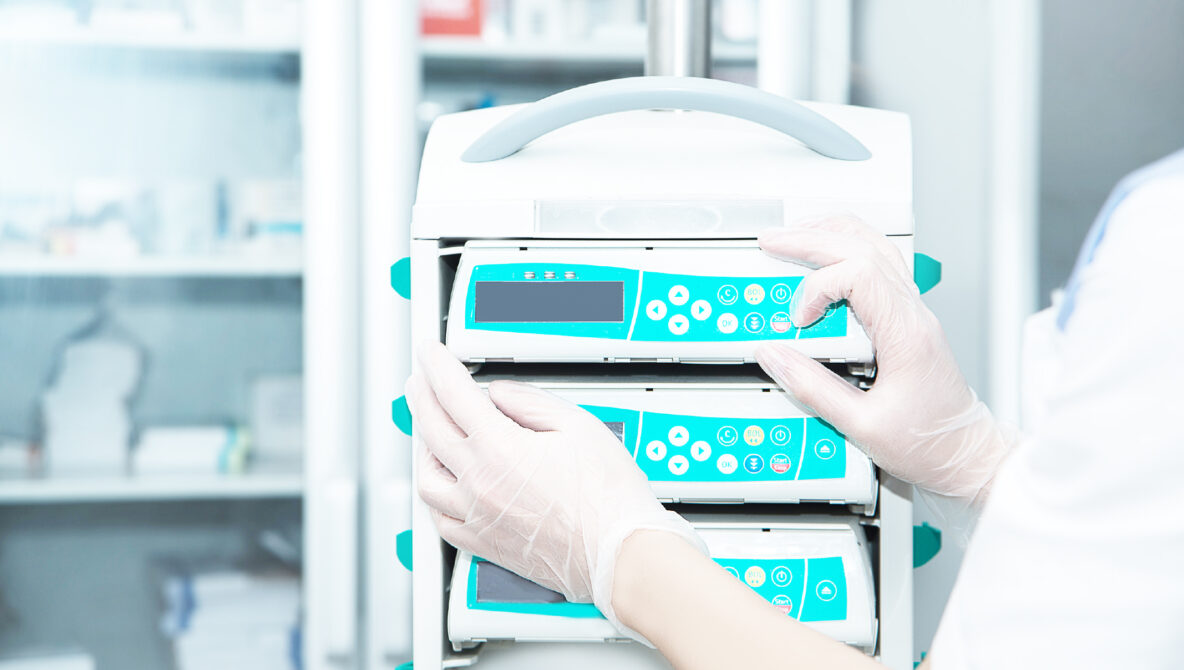
These demands place new pressure on Healthcare Technology Management (HTM) teams, who now manage complex, interconnected biomedical environments. Responsibilities span commissioning, preventive maintenance, calibration, lifecycle planning and regulatory compliance, supported by disciplined approaches to parts management, uptime and downtime planning, recall tracking, global logistics and cybersecurity.
A device outage is more than a maintenance issue. In a maritime environment, where redundancy and immediate replacement options are limited, reliability is not a convenience, it is a fundamental component of safe and effective care. As onboard care becomes increasingly technology dependent, predictable uptime becomes essential.
On ships, a device being down is not simply a maintenance issue. It can become a routing decision, a reputational risk amplified through social media, or a patient safety event. As onboard capabilities continue to expand - across imaging, laboratory, and respiratory services - so does the requirement for predictable uptime and rapid swap-and-repair models.
Looking ahead, the convergence of connectivity, advanced diagnostics, remote clinical support, and data-driven maintenance strategies will only accelerate this transformation.
As medical centres integrate more closely into fleet operations, HTM programmes must evolve to match. Proactive, predictive strategies aligned with clinical priorities will define the next stage of maturity. The cruise medical centre is increasingly an integrated care hub, and HTM is one of the quiet forces that determines whether that hub is safe, compliant, resilient, and future-ready.
At VIKAND, we treat HTM as a strategic capability, working closely with partners to deliver consistent, high-quality care anywhere in the world. Our teams are deeply integrated with clinical leadership, IT, security, hotel operations, and shoreside networks, because that is what it now takes to deliver consistent, high-quality care beyond the shoreline.
In this edition of Pulse, learn why knowing your doctor can mean better care, explore our case study on a traumatic amputation at sea, learn how PEMEs are a strategic safeguard for maritime operations, and more.