
A crew member develops chest pain on a vessel hundreds of nautical miles from the nearest hospital. As captain, you have one question: Is this a heart attack, or can we safely continue our voyage?
Few onboard situations are more stressful, as every decision has consequences. Evacuate too quickly and you may create a costly diversion that takes you off schedule and off course. Wait too long, and the outcome could be catastrophic.
This is the daily reality of maritime medicine, and it helps explain why cardiovascular disease remains one of the industry’s greatest health challenges.
The deadliest illness isn’t always the most common
Cardiovascular disease is the world’s leading cause of death, claiming an estimated 17.9 million lives each year. At sea, its impact is even greater.
According to the 2026 Gard Crew Claims Report, illness accounts for 60% of all crew claims, with cardiovascular disease responsible for both the highest costs and the greatest number of fatalities. While cardiovascular conditions represent only a portion of onboard medical cases, they carry the greatest human and operational consequences.
What VIKAND is seeing out in the field
Industry data on cardiovascular events aligns closely with what we’re observing onboard client ships through OneHealth by VIKAND.
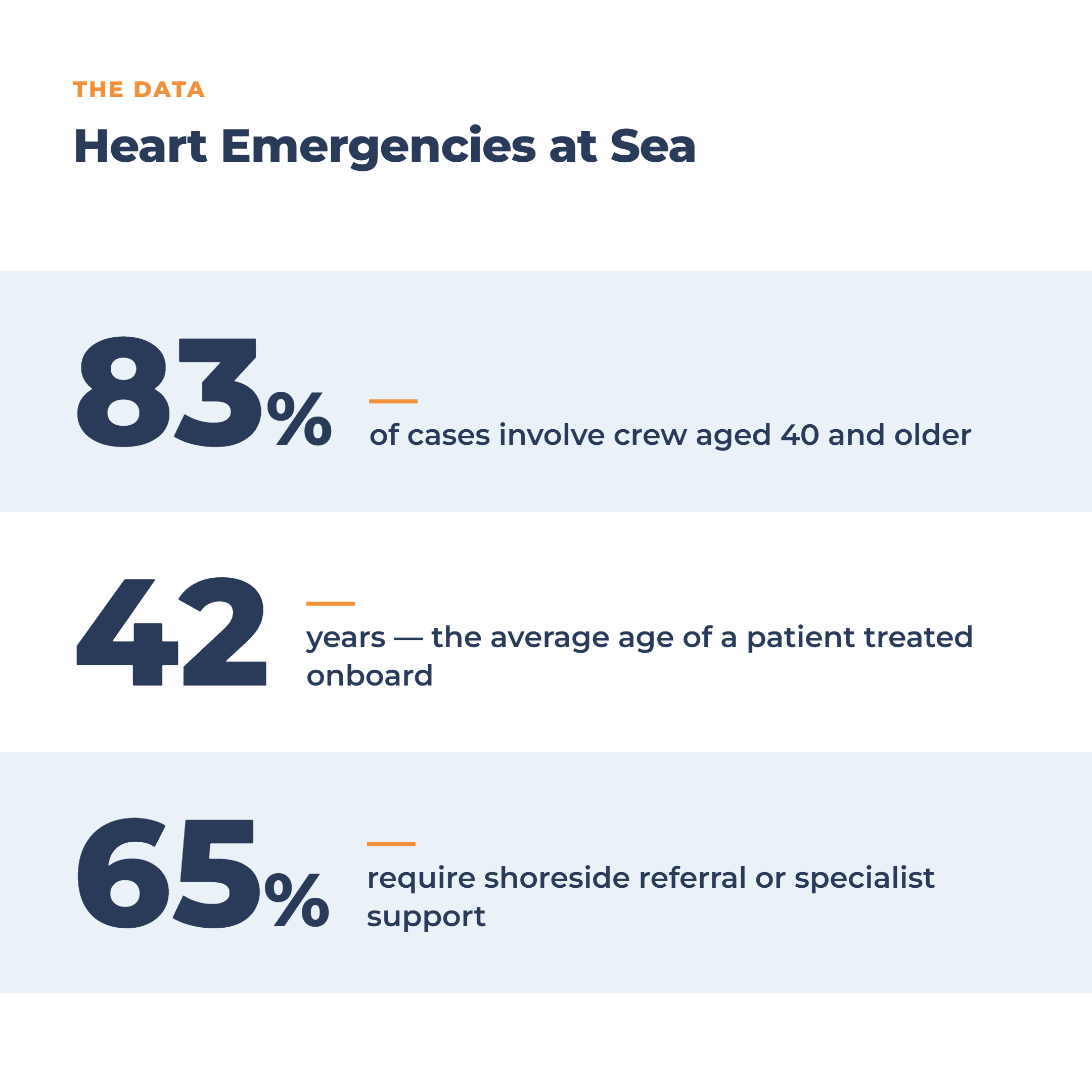
VIKAND data reveals several clear patterns:
- 83% of cases involve crew aged 40 and older
- The average patient age is approximately 42 years
- 65% require shoreside referral or specialist support
These findings reinforce an important point: Most cardiovascular emergencies don’t appear without warning. They develop over time, often beginning as chronic conditions that gradually worsen until intervention becomes unavoidable.
Why cardiovascular disease is different at sea
Hypertension remains the most common cardiovascular condition encountered by VIKAND clinicians. Left unmanaged, it significantly increases the risk of stroke, heart attack, arrhythmia and heart failure.
But managing chronic conditions at sea is more challenging than it is ashore, and the maritime work environment creates a unique combination of risk factors, such as:
- Long contracts
- Shift work
- Disrupted sleep
- Fatigue and stress
- Limited exercise
- Inconsistent medical care
For many crew members, the challenge isn’t recognising an emergency. It’s recognising the warning signs before one develops.
The opportunity is earlier intervention
The encouraging news is that many serious cardiovascular events can be prevented through earlier recognition and consistent management. The most common presentations observed by onboard VIKAND medical teams include:
- Uncontrolled hypertension
- Chest pain requiring assessment
- Newly detected arrhythmias
- Dizziness or exertional symptoms
- Management of cardiovascular risk factors such as diabetes and hyperlipidaemia
Often, relatively simple interventions have the greatest impact:
- Routine blood pressure monitoring
- Medication compliance
- Early reporting of symptoms
- Ready access to prescribed medications
- Prompt telemedical consultation
Medical escalation should never be delayed when crew members experience chest pain, persistently elevated blood pressure, a new irregular heartbeat, syncope or symptoms that continue to worsen.
The earlier a condition is identified, the greater the opportunity to stabilise the patient and avoid emergency evacuation.
Recently, a 60-year-old crew member developed chest pain onboard a vessel operating in a remote region where immediate evacuation wasn’t possible. Working closely with the ship’s command team, VIKAND clinicians established twice-daily monitoring of symptoms, blood pressure and ECG findings while initiating anti-anginal therapy.
Although the crew member experienced several recurring episodes and communication was occasionally limited, his condition remained stable through continuous monitoring and treatment adjustments.
Nearly two weeks later, the vessel reached port as scheduled, allowing the crew member to be safely disembarked for further evaluation without requiring an emergency evacuation. This outcome wasn’t simply the result of clinical expertise. It reflected the value of structured protocols, continuous monitoring and close collaboration between ship and shore.
Better cardio care means healthier operations
Cardiovascular disease remains the leading cause of death at sea, but it doesn’t have to remain the leading cause of preventable medical evacuations. Improving outcomes starts with better management of chronic disease, earlier reporting of symptoms and timely access to clinical support.
For shipowners, investing in cardiovascular health is about strengthening operational resilience, reducing disruption and ensuring people return home safely.
Shareable Insights
Cardiovascular disease is responsible for both the highest costs and the greatest number of fatalities at sea.
Cardiovascular emergencies rarely occur in isolation. They usually start with a chronic condition that was never stabilised.
Telehealth isn’t designed to replace hospitals. It’s about bringing expert clinical judgement to the places hospitals can’t reach.
For shipowners, investing in cardiovascular health can strengthen operational resilience and reduce costly disruptions.