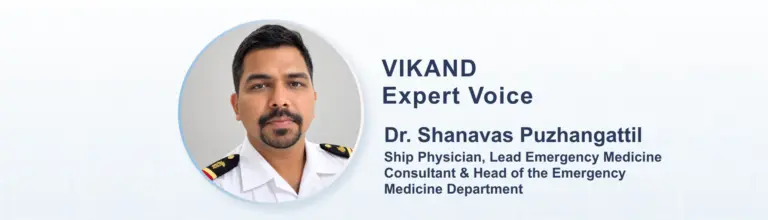
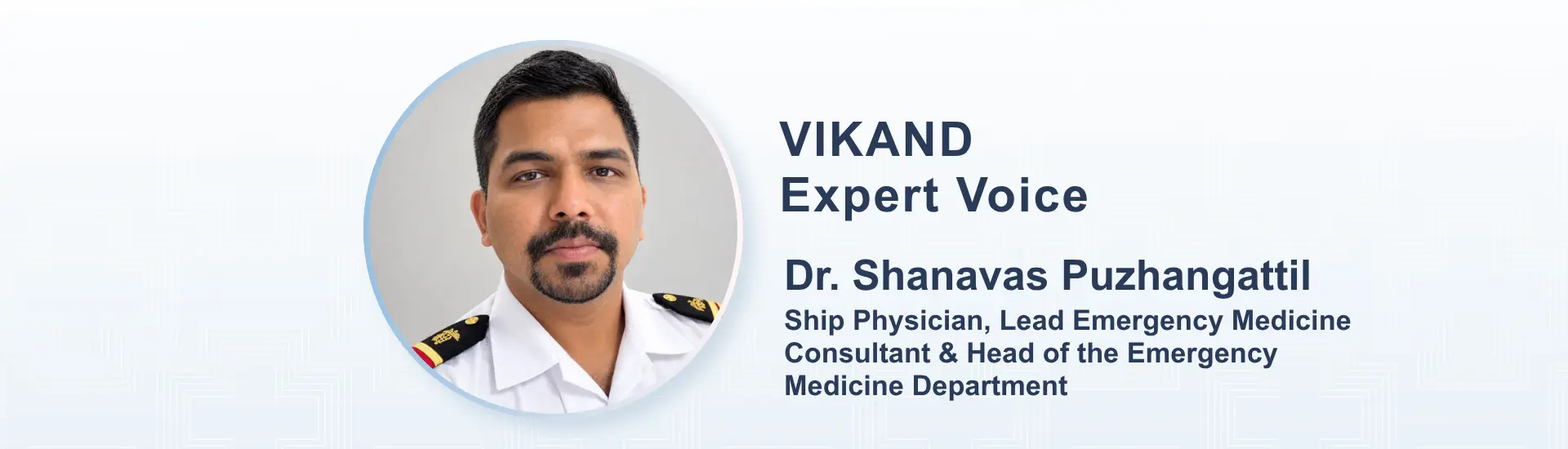
By Dr. Shanavas Puzhangattil, Lead Emergency Medicine Consultant & Head of the Emergency Medicine Department, Ship Physician
Naloxone can produce one of the most dramatic responses in emergency medicine. A patient experiencing severe opioid-induced respiratory depression receives the medication, begins breathing and may regain consciousness within moments.
However, visible awakening is not the true measure of successful treatment. The clinical objective is to restore adequate ventilation and protective airway reflexes without precipitating avoidable complications.
This distinction is particularly important at sea, where diagnostic resources may be limited and transfer to definitive care can take hours. Naloxone should not be approached as a one-dose solution, but as one part of continued respiratory support, monitoring and clinical reassessment.
Reversal Is Not the End of the Emergency
Naloxone is shorter-acting than many opioids, including methadone, modified-release preparations and some potent synthetic opioids. A patient who initially responds may therefore experience recurrent respiratory depression after the naloxone begins to wear off.
A successful first dose does not mean the danger has passed.
Patients require close monitoring after reversal, with the observation period adjusted to the opioid involved, its expected duration and the patient’s clinical response. Where repeated boluses are needed to maintain ventilation, a continuous naloxone infusion may be more appropriate than allowing the patient to cycle between improvement and renewed respiratory depression.
A dosing nomogram published in Annals of Emergency Medicine recommends calculating the infusion rate from the dose required to produce adequate ventilation. The rate should then be adjusted according to the patient’s response and the applicable clinical protocol. Toxicology or shoreside medical advice should be sought where available.
Treat Ventilation, Not Consciousness
The purpose of naloxone is not to produce a fully alert patient. It is to reverse life-threatening respiratory depression.
In a patient who is still breathing, small incremental intravenous doses allow clinicians to restore ventilation while reducing the likelihood of abrupt withdrawal. The Royal College of Emergency Medicine’s guidance on acute opioid toxicity recommends titrating intravenous naloxone in 100–200 microgram increments until the respiratory rate is above 10 breaths per minute, oxygen saturation is adequate and protective airway reflexes are maintained.
Excessive naloxone can precipitate acute opioid withdrawal, particularly in opioid-dependent patients. This may cause nausea, vomiting, agitation, hypertension and tachycardia. Severe agitation can also create additional risks for the patient and responding crew, while vomiting in a patient with impaired airway protection increases the risk of aspiration.
Pulmonary oedema and other pulmonary complications have also been reported after opioid poisoning and naloxone administration. An observational study of more than 1,800 patients found an association between higher naloxone doses and increased pulmonary complications. However, the relationship is complex. Opioid poisoning itself can cause non-cardiogenic pulmonary oedema, making it difficult to attribute individual cases directly to naloxone.
The clinical lesson is not to withhold a lifesaving antidote. It is to use the lowest effective dose needed to restore adequate ventilation.
Ventilation Comes First
When a patient is apnoeic or breathing inadequately, airway management and assisted ventilation are immediate priorities. The airway should be opened and breathing supported with a bag-valve-mask and supplemental oxygen while naloxone is administered.
Cardiac arrest is a different clinical scenario. High-quality cardiopulmonary resuscitation, ventilation, defibrillation when indicated and advanced life support must take priority. Naloxone may be administered when opioid poisoning is suspected, but it must not interrupt or delay standard resuscitation.
The American Heart Association’s 2025 resuscitation guidelines note that evidence supporting naloxone during established cardiac arrest remains uncertain. Its clearest role is in reversing respiratory depression before hypoxia progresses to cardiac arrest.
Choosing the Route
Intravenous naloxone is generally preferred in a monitored clinical environment because it allows rapid, precise titration. Intranasal and intramuscular formulations remain valuable when intravenous access is unavailable or delayed, particularly for first responders and non-clinical personnel.
However, these routes are less suited to fine titration and may take longer to reach peak effect. Repeat administration may also be required. The choice of route should reflect the patient’s condition, the responder’s level of training and the resources available.
Building Readiness at Sea
A safe response to opioid poisoning depends on more than carrying naloxone. Onboard protocols should clearly distinguish between respiratory depression, respiratory arrest and cardiac arrest. Medical teams also require access to oxygen, bag-valve-mask ventilation, suction, appropriate monitoring equipment and a defined pathway for obtaining shoreside clinical support.
The possibility of recurrent toxicity should be reflected in observation, escalation and medical evacuation planning.
The Takeaway
Naloxone saves lives. The danger lies not in using it, but in treating reversal as a single event or mistaking full consciousness for clinical stability.
Effective management focuses on ventilation, careful titration and continued observation. By supporting breathing first, using the lowest effective naloxone dose and anticipating recurrent toxicity, clinicians can move beyond a one-dose mindset and deliver safer, more precise care.
—
Additional information on this topic can be found in the textbook
A Comprehensive Textbook in Toxicology: A Practical Toxicology Guide for Emergency Medicine and Critical Care.
Available on Amazon.com – link here