

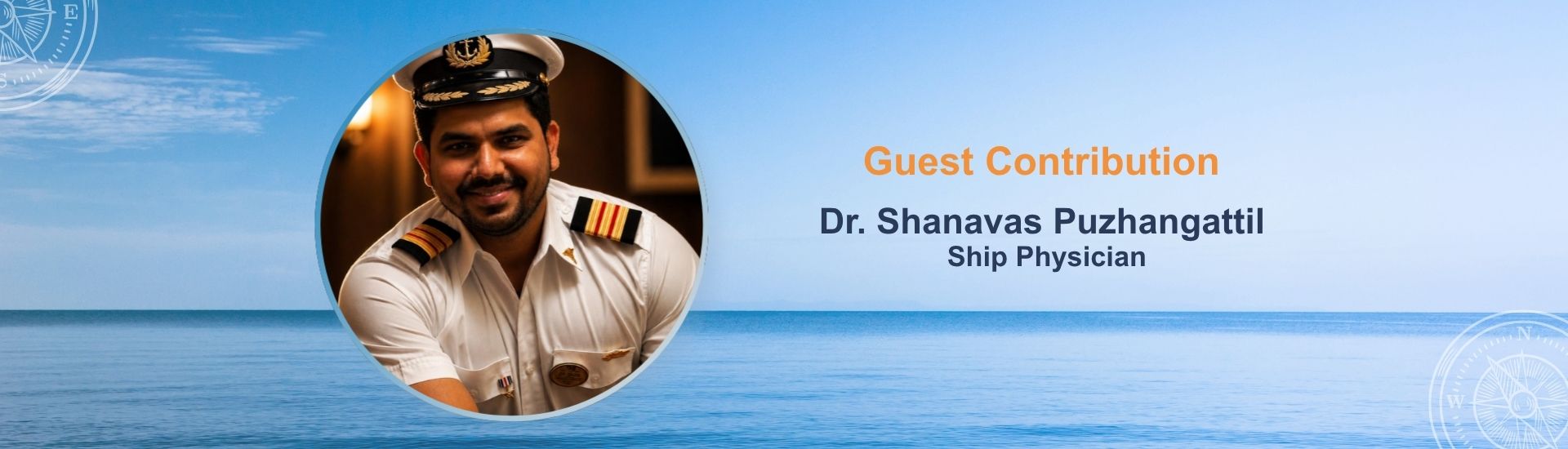
Strengthening Clinical Governance and Operational Excellence in Maritime Healthcare, by Dr. Shanavas Puzhangattil
 Delivering healthcare at sea presents challenges that don't exist ashore. Limited resources, remote operating environments and complex logistics mean medical teams must be prepared to deliver safe, consistent care under demanding conditions.
For premium and luxury operators, the impact extends well beyond patient outcomes. The quality of onboard medical services also influences crew wellbeing, operational continuity and the overall guest experience. Building a more resilient medical service requires strong clinical governance, standardised processes, digital tools and effective inventory management that support safe, consistent care across the fleet.
Clinical governance reduces operational risk
Guests and crew expect safe, reliable healthcare throughout every voyage. Delivering that consistently takes more than clinical expertise. It requires a framework that supports good decision-making, standardises care and drives continuous improvement.
Without that framework, avoidable risks become more likely—from medication errors and adverse drug reactions to documentation gaps and inconsistent responses. Evidence-based standard operating procedures (SOPs) for common medical emergencies help ensure clinicians can respond quickly and consistently, even in high-pressure situations.
Regular clinical audits, incident reviews and ongoing training in emergency medicine, maritime medicine and clinical documentation reinforce those standards, giving onboard medical teams the tools to continuously improve the quality and consistency of care.
Clinical governance also plays an important role in supporting crew health. Routine reviews for crew members living with non-communicable diseases (NCDs), using standardised health assessment tools, can identify deteriorating health before it becomes an emergency. In many cases, early intervention helps reduce medical evacuations, unplanned port calls and unnecessary operational disruption.
Optimising medical inventory
Effective inventory management is integral to safe clinical care. Historically, onboard medical inventories have suffered from overstocking, shortages, expired medications and inefficient procurement processes. Improving inventory management can reduce waste, improve stock availability and strengthen financial oversight.
A modern maritime medical facility should consider implementing a digital inventory system that includes:
- Real-time inventory dashboards: Centralised digital tracking provides inventory visibility across the fleet and improves stock control.
- FEFO expiry monitoring: Applying First-Expired, First-Out (FEFO) principles helps ensure medicines are used before expiry, reducing pharmaceutical waste.
- Automated reordering: Intelligent stock thresholds help maintain appropriate inventory levels while avoiding excess purchasing.
- Strategic procurement and returns: Working with pharmaceutical suppliers that offer medicine return programmes can reduce expired stock and improve inventory rotation.
- Cost-effective quality assurance: Procuring high-quality generic medicines and consumables supports cost efficiency without compromising clinical standards.
Integrating inventory systems with electronic billing helps ensure medications and consumables are accurately recorded and charged. Combined with standardised billing processes and regular audits, it improves accountability while reducing billing discrepancies and lost revenue.
Connecting onboard and shoreside care
Effective medical care doesn't begin and end onboard. Simple preventative measures, such as pre-joining dental assessments, can help reduce avoidable dental emergencies at sea, limiting the need for costly shoreside treatment and unnecessary operational disruption.
Establishing preferred referral facilities ashore also helps create a smoother transition when follow-up care is needed, improving continuity while reducing administrative complexity.
Telehealth has become an equally important part of modern maritime healthcare. Giving onboard clinicians access to shoreside specialists provides valuable clinical support, strengthens decision-making and expands access to expertise that may not otherwise be available at sea, particularly on vessels operating with lean medical teams.
Building resilient onboard medical services
Delivering high-quality healthcare at sea is about more than responding to medical emergencies. It means building systems that support safe, consistent care every day, whether through clinical governance, effective inventory management, digital tools or access to shoreside expertise.
When these foundations are in place, onboard medical teams are better equipped to care for guests and crew while reducing operational risk, unnecessary costs and disruption. As expectations continue to evolve across the maritime industry, investing in these areas will help operators build more resilient medical services that support both their people and their operations.
Dr. Shanavas Puzhangattil MBBS,DNB,MBA. Ship physician, Emergency Medicine Specialist, Assist. Professor, Healthcare Quality Improvement Professional for Hospitals and Healthcare Facilities (NABH).